Fritz Saxl - Eine Biografie
Aby Warburgs Bibliothekar und erster Direktor des Londoner Warburg Institutes
- First published:
- 21st century
- Language: German
- Content type: Fiction
Aby Warburg (1866-1929), the celebrated Hamburg art historian, who broke new ground with his research into Renaissance art history, found in Fritz Saxl (1890-1948), art historian, head librarian and finally his successor as director of Warburg's library and later the Warburg Institute, a scholar who contributed to the shaping of a pluridisciplinary understanding of research. Through Saxl's research of problems of Late Antiquity and the Middle Ages he gave important impulses to the scholarly understanding of intellectual history. Saxl, who extended the library system of the "good neighbourliness" of books, demonstrated his organizational thinking and strategies, which anticipated the use of hyperlinks - albeit without today's electronic technology. It was Saxl who turned Warburg's library from a private library into the centre of an international network for scholars. He spoke of himself as the wanderer through the museums and libraries of Europe, an agricultural worker who worked the piece of ground between history of art, literature, science and religion. Saxl's own research agenda was multifarious, the history of astrology, of mythology, in particular the research into illuminated astrological and mythological manuscripts of the Middle Ages, gleaned from archives all over Europe and published in three comprehensive Verzeichnisse. He further worked on religions of classical antiquity, the transition from pagan to Christian traditions, Mithras as well as art historical topics, Bellini, Titian. His life-long great admiration for Rembrandt found expession in a number of publications. 17th century art history, English medieval sculpture and his last great interest, seals, completed his scholarly output. But next to these research topics his achievements in the fields of organization were the area in which Saxl truly excelled. Warburg, although he spoke of him as the "junior partner", admired his scholarly honesty and thoroughness, but ultimately underestimated his achievements in administration and organization; these alone made it possible that the private library of Warburg could be consolidated into a internationally approved institute of teaching and research in Germany, and then in Great Britain. As Warburg's successor Saxl both kept as close as possible to Warburg's method as well as break fresh ground. Saxl was a truly original thinker, a congenial teacher, very demanding to his students and colleagues, but also fiercely supportive, for instance, to Roger Hinks, when he lost his post at the British Museum in the course of the affair of the cleaning of the Elgin Marbles. He employed Anthony Blunt as editor of the Warburg Institute publications, he brought Ernst H. Gombrich from Vienna to London in 1936. He was a great example to the young art historian John Pope-Hennessy, later Director of the Victoria and Albert Museum and the British Museum. Today, the Warburg Institute is a post-graduate research institute specializing in researching cultural and intellectual history, a forum for scholars and students. The fact that teaching and research could be kept up in Hamburg until 1933 and resumed in London from 1934 onward, speaks for the personal commitment of the employees and above all for Saxl;s intellectual courage and sense for practical solutions. His unstinting effort and dedication were certainly reasons for Saxl's early death at 58 years of age.
Provenance
Why this book is in the catalog
Included because retained bibliographic metadata links this work to Astrology.
Controlled discovery queries from doab matched “astrology”. Retained metadata contains “astrological” in the description, “Astrology” in the description, and “astrological” in the subject metadata.
- “astrology”· via Directory of Open Access Books
- “astrological”· in description
- “Astrology”· in description
- “astrological”· in subject
Membership records how this book met the catalog’s discovery criteria — relevance to a tradition, not a judgment of the book’s claims.
Read & download
Free, public copies reported by our sources. Links open the source directly.
Open-access license: open access
Not yet in passage search
Pro research answers quote indexed passages. Ask the library to index this book’s public text.
marks a direct file download. Rights vary by country; each source states its own terms.
Buy or borrow
No ISBN on record, so the Amazon link searches by title and author. WorldCat shows libraries near you that hold a copy.
Editions
One edition cataloged here.
| Edition | Date | Publisher | Language | ISBN | Access | Links |
|---|---|---|---|---|---|---|
Aby Warburgs Bibliothekar und erster Direktor des Londoner Warburg Institutes Directory of Open Access Books edition | 2013 | — | German | — | Open access |
Subjects
More like this
Books that share this work's traditions, subjects, or authors.
Il "De Sphaera" Estense e l'iconografia astrologica
Sergio Samek Ludovici
1958Italian
Aby M. Warburg, Bildersammlung zur Geschichte von Sternglaube und Sternkunde im Hamburger Planetarium
Aby Warburg, Uwe Fleckner
1993German
- Read free

Theatrum chemicum Britannicum
Elias Ashmole, Isaac Newton, Henry Carrington Bolton
1652
- Read free
August Strindberg: The Occult Diary
Gunnel Engwall, Ann-Charlotte Gavel Adams, Per Stam
2022
- Read free

The White People
Frances Hodgson Burnett
1917
- Read free
An den Wurzeln der Tugend: Rheinischer Adel und Freimaurerei 1765–1815
Martin Otto Braun
2016German
- Read free
Kaiser Ferdinand III. (1608–1657)
Mark Hengerer
2012German
- Read free

Polygraphice: or, The arts of drawing, engraving, etching, limning, painting, washing, varnishing, gilding, colouring, dying, beautifying and perfuming ... : To which also is added, I. The one hundred and twelve chymical arcanums of Petrus Johannes Faber ... II. An abstract of choice chymical preparation, fitted for vulgar use, for curing most diseases incident to humane bodies
Pierre-Jean Fabre, Lessing J. Rosenwald Collection, Lessing J. Rosenwald Collection Dlc, Thomas Passinger, William Salmon, Thomas Sawbridge
1685
- Read free

Mystic London: or, Phases of occult life in the British metropolis.
Charles Maurice Davies
1884
- Read free
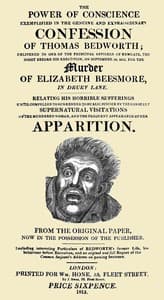
The Power of Conscience, exemplified in the genuine and extraordinary confession of Thomas Bedworth
Thomas Bedworth
Date unknown

Vår del av natten
Mariana Enríquez
2022Norwegian (Bokmål)
- Read free
Sal, lumen, et spiritus mundi philosophici or the dawning of the day, discovered by the beams of light: shewing the true salt and secret of the philosophers, the first and universal spirit of the world
Ludwig Combach
1657
Identifiers & provenance
How this record was assembled, and the authority identifiers it carries.
Identifiers
- DOAB
- 20.500.12854/39414
Cataloged from
- Directory of Open Access Booksprimary20.500.12854/39414 (opens in a new tab)
- Catalog id
- doab:20.500.12854/39414
- Edition coverage
- Doab source record
- Retrieved