The feast of Bacchus
by Ernest Ernest George Henham
- First published: Date unknown
- Language: English
- Content type: Fiction
"The feast of Bacchus" by Ernest G. Henham is a novel written in the early 20th century. It is an atmospheric, theatrically structured tale in which a neglected country manor called the Strath exerts shifting moods of comedy and tragedy over those who enter it, especially the reclusive classical scholar Dr. Berry and the blunt new owner, Henry Reed. Threaded through are sharp social conversations about love, marriage, and modernity, setting reason against mysticism and appetite against restraint. The opening of the novel drifts from a languid river scene—where Maude Juxon and her friend Flora Neill spar over flirtation, convenience in marriage, and “spiritual” love—into the secluded valley of Thorlund and the uncanny garden of the Strath. There the gentle rector-scholar Dr. Berry, long inspired (and subtly ruled) by the garden’s alternating gaiety and gloom, meets Henry Reed, who has returned to occupy the long-deserted house; together they enter a dust-locked dining room eerily preserved as if a century-old feast had just ended, and find a leering comic mask on the wall. Outside the gate, Reed’s practical, defiant streak reasserts itself—he talks of felling trees and breeding poultry—while Berry warns that the place will break him, recounts the manor’s dark lore, and tests Reed’s soul with Greek verse to no effect. As a storm gathers, Berry yields to the garden’s tragic pull, burning incense at the sun-dial, then meets Lone Nance, a wild, visionary girl, and hears the flat fatalism of a hay-cutter about the “broken” old being sent to the workhouse; that night, Berry collapses over his manuscripts, and by morning Reed is found dead across the hall threshold. An interlude shifts to London, where the dissipated Charles Conway—Reed’s relative and heir—receives news of the murder and sets out for the Strath, as the local inquest returns the familiar verdict against unknown hands. (This is an automatically generated summary.)
Provenance
Why this book is in the catalog
Included because retained bibliographic metadata links this work to Ghosts, hauntings, and poltergeists.
Controlled discovery queries from project-gutenberg matched “haunted”. Retained metadata contains “haunted” in the subject metadata.
- “haunted”· via Project Gutenberg
- “haunted”· in subject
Membership records how this book met the catalog’s discovery criteria — relevance to a tradition, not a judgment of the book’s claims.
Read & download
Free, public copies reported by our sources. Links open the source directly.
- EPUB (opens in a new tab)
- HTML (opens in a new tab)
- Plain text (opens in a new tab)
- Landing page (opens in a new tab)
Project Gutenberg ebook; public domain in the USA. Public domain in the USA.
marks a direct file download. Rights vary by country; each source states its own terms.
Buy or borrow
No ISBN on record, so the Amazon link searches by title and author. WorldCat shows libraries near you that hold a copy.
Editions
One edition cataloged here.
| Edition | Date | Publisher | Language | ISBN | Access | Links |
|---|---|---|---|---|---|---|
Project Gutenberg electronic edition Project Gutenberg metadata does not identify the source print edition. | 2026-03-10 | Project Gutenberg | English | — | Public domain (USA) |
Subjects
More like this
Books that share this work's traditions, subjects, or authors.
- Read free
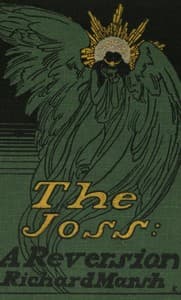
The Joss: A Reversion
Richard Marsh
Date unknown

The Shining
Stephen King
1977
- Read free
Tales of the Wonder Club, Volume III
M. Y Halidom, John Jellicoe, Val R Prince
Date unknown
- Read free
Tales of the Wonder Club, Volume I
M. Y Halidom, John Jellicoe, Val R Prince
Date unknown
- Read free
Tales of the Wonder Club, Volume II
M. Y Halidom, John Jellicoe, Val R Prince
Date unknown
- Read free
The Haunted and the Haunters; Or, The House and the Brain
Edward Bulwer Lytton Lytton
Date unknown
- Read free
The House of the Seven Gables
Nathaniel Hawthorne
Date unknown
- Read free

Kauhujen talo
Edward Bulwer Lytton Lytton
Date unknownFinnish

The Haunting of Hill House
Shirley Jackson
1959

Jade Green
Phyllis Reynolds Naylor
2000

Welcome to Dead House
Robert Lawrence Stine
1992

Remember Me
Christopher Pike
1989
Identifiers & provenance
How this record was assembled, and the authority identifiers it carries.
Identifiers
- Project Gutenberg
Cataloged from
- Project Gutenbergprimary78162 (opens in a new tab)
Found via
Cataloging notes
- Original print publication date and source edition are absent from Project Gutenberg metadata.
- Catalog id
- project-gutenberg:78162
- Edition coverage
- Project gutenberg electronic edition
- Retrieved