The origin of the werewolf superstition
- First published:
- 20th century
- Language: English
"The Origin of the Werewolf Superstition" by Caroline Taylor Stewart is a scholarly examination of the historical belief in werewolves, likely written in the late 19th century. The text delves into the origins of this superstition, discussing how human transformation into wolves has been a widespread phenomenon across various cultures. The author aims to explore the common threads in werewolf mythology and its connections to cultural practices and primitive rituals. The opening of the work outlines the foundational ideas surrounding the werewolf superstition, explaining that these beliefs have not been thoroughly understood until now. It highlights the different theories presented by scholars regarding the nature of lycanthropy, such as its probable roots in primitive customs and the cultural significance of animal disguises used by early humans for hunting and ritualistic purposes. Stewart notes that these beliefs often arose in times when humans were still trying to understand and control the natural world, framing werewolves as creatures embodying both fear and fascination. The section sets the stage for a detailed investigation into how this superstition evolved over time and varied across different regions. (This is an automatically generated summary.)
Provenance
Why this book is in the catalog
Included because retained bibliographic metadata links this work to Legendary beings and transformations.
Controlled discovery queries from openlibrary and project-gutenberg matched “Werewolves” and “werewolves”. Retained metadata contains “Werewolves” in the description and “Werewolves” in the subject metadata.
- “Werewolves”· via Open Library
- “werewolves”· via Project Gutenberg
- “Werewolves”· in description
- “Werewolves”· in subject
Membership records how this book met the catalog’s discovery criteria — relevance to a tradition, not a judgment of the book’s claims.
Read & download
Free, public copies reported by our sources. Links open the source directly.
- EPUB (opens in a new tab)
- HTML (opens in a new tab)
- Plain text (opens in a new tab)
- Landing page (opens in a new tab)
Project Gutenberg ebook; public domain in the USA. Public domain in the USA.
Publicly readable scan; copyright status may vary by jurisdiction.
marks a direct file download. Rights vary by country; each source states its own terms.
Buy or borrow
- Buy on Amazon (opens in a new tab)
- Find in a library (opens in a new tab)
- Open Library (opens in a new tab)
Links to ISBN 0342843761; other editions may be cheaper. WorldCat shows libraries near you that hold a copy.
Editions
Open Library reports 6 editions; 2 cataloged here.
| Edition | Date | Publisher | Language | ISBN | Access | Links |
|---|---|---|---|---|---|---|
Open Library record | 1909 | University of Missouri | English |
| Public | |
Project Gutenberg electronic edition Project Gutenberg metadata does not identify the source print edition. | 2013-11-08 | Project Gutenberg | English | — | Public domain (USA) |
Subjects
More like this
Books that share this work's traditions, subjects, or authors.
- Read free

Werwolves
Elliott O'Donnell
Date unknown
- Read free

Wagner, the Wehr-Wolf
George George William MacArthur Reynolds
Date unknown
- Read free
Black hound of death
Robert Robert Ervin Howard, Harold Saylor De Lay
Date unknown
- Read free
The hairy ones shall dance
Manly Wade Wellman, Margaret Brundage, Virgil Finlay
Date unknown
- Read free

The Were-Wolf
Clemence Housman, Laurence Housman
Date unknown
- Read free
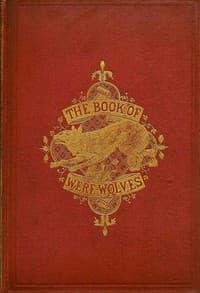
The Book of Were-Wolves
Sabine Baring-Gould
Date unknown
- Read free
Loup-Garou
Wallace West, Hugh Rankin, Curtis Charles Senf
Date unknown
- Read free

Lycanthropus
C. Edgar Bolen
Date unknown
- Read free
The thing in the woods
Harper Williams
Date unknown
- Read free
The Wolf-Leader
Alexandre Dumas, Frank Adams, Alfred Richard Allinson
Date unknown
- Read free

El Tresor del Vell Cavaller
Erckmann-Chatrian, Joan Sitjar
Date unknownCatalan
- Read free

Sudenmorsian
Aino Kallas
Date unknownFinnish
Identifiers & provenance
How this record was assembled, and the authority identifiers it carries.
Identifiers
- ISBN-13
- ISBN-10
- Open Library work
- Project Gutenberg
- Internet Archive
Cataloged from
- Open LibraryOL216507W (opens in a new tab)
- Project Gutenberg44134 (opens in a new tab)
Cataloging notes
- Open Library reports 6 editions; this snapshot catalogs one representative edition and preserves work-level ISBN, date, and publisher aggregates.
- Original print publication date and source edition are absent from Project Gutenberg metadata.
- Catalog id
- openlibrary-work:OL216507W
- Edition coverage
- Multi source partial
- Retrieved